
Build Together, Sustain Together: What We Took Home from the LAC Regional DPI Forum
Aura Cifuentes, Director, Latin America & the Caribbean (Co-Develop), and Jon Lloyd, Director of Advocacy and 50-in-5 (DPGA Secretariat)
At the end of September, delegations from 22 countries gathered in Santo Domingo for the Regional DPI Forum for Latin America and the Caribbean, hosted by the Dominican Republic’s Ministry of Public Administration and OGTIC. We were both in the room: one of us after years building digital services from inside Colombia’s government, the other working with countries on digital public goods at the DPGA Secretariat, which co-coordinates the 50-in-5 campaign alongside Co-Develop.
We came home convinced that what is happening in this region is no longer a set of separate national projects. It is becoming a movement.
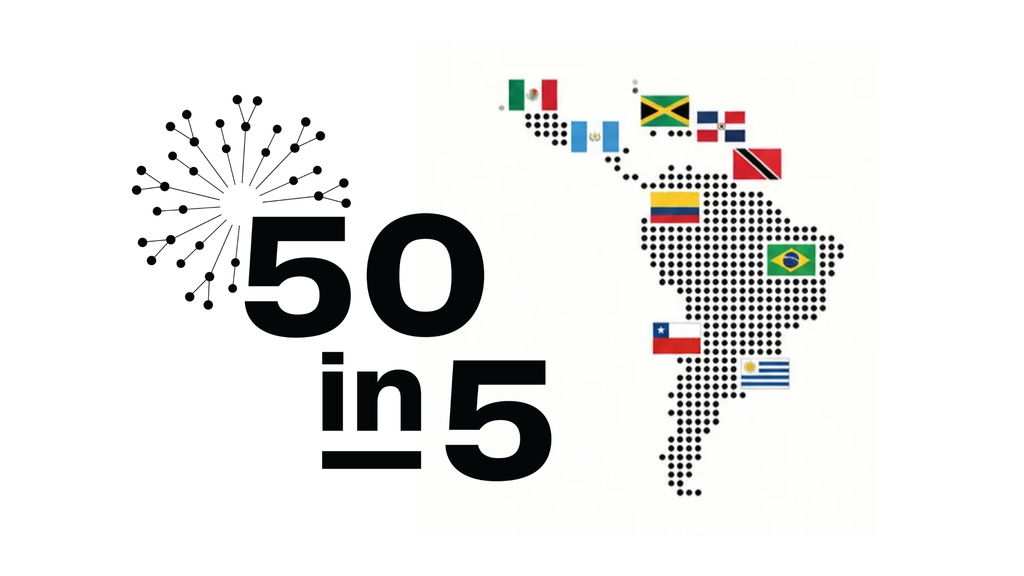
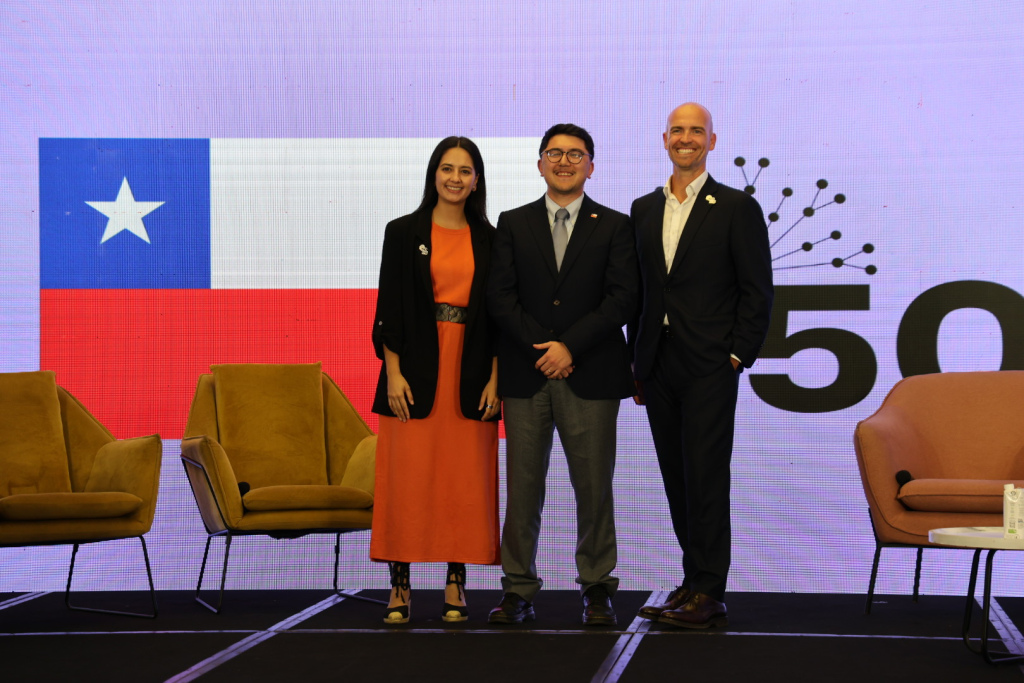
The signs go beyond one event. During the Forum, Chile became the 41st country to join 50-in-5, and the ninth from the region, alongside Brazil, Colombia, the Dominican Republic, Guatemala, Jamaica, Mexico, Trinidad and Tobago and Uruguay. Chile’s Digital Government Secretariat aims to learn from countries facing similar challenges and move faster on digital identity by connecting public institutions. They also want to share its home-grown technologies as digital public goods. The instinct to learn from each other rather than start from scratch, is what this movement runs on.
Three moments from the Forum show where this movement is heading, and what it will take to sustain it.
1. Sustain Is the Stage We Forget to Fund:
The proposal that stayed with us most came from Sigmund Freund, the Dominican Republic’s Minister of Public Administration. He called for a Regional Sovereign Technology Fund to support regional countries to:
1. Jointly build and adapt digital public goods;
2. Adopt DPGs with technical and financial support, and;
3. Sustain them through maintenance, security updates and developer communities.
He named sustain as the most neglected of those three stages of DPI implementation, a perspective that we agree with. In government, the launch is when attention and budget arrive. What comes after is quieter and harder to fund: the updates, the security patches, and the team that keeps a platform alive.
We also welcomed how he framed sovereignty: it is not isolating yourself and doing things alone. It is the ability to choose your technology, audit the code behind critical systems, and avoid depending on a single vendor. So choosing sovereignty and collaborating with others aren’t mutually exclusive decisions – collaborating using digital public goods can actually accelerate your progress.
2. Sharing and Collaboration Is Already Happening, One Wallet at a Time
The Dominican Republic describes its digital strategy with three verbs: digitise, integrate, and anticipate. Minister Freund proposed that the region add a fourth: share. That means standards, source code and architectures, and investment where it makes sense.
The Forum showed this is more than an aspiration. Colombia, Brazil, Peru, and Trinidad and Tobago each presented their verifiable credential wallets, built with support from the Centre for Digital Public Infrastructure (CDPI). Three of the four are 50-in-5 countries. Then the Dominican Republic launched its own, with the Minister on stage: a National Verifiable Credentials Framework that brings this capability into Soy Yo RD, the country’s citizen folder, with support from the IDB, CDPI and Co-Develop.
The first credential certifies that someone is a public servant and is issued by the Ministry of Public Administration. Environmental certificates from the Ministry of Environment and tax credentials from the DGII are in development. For people, it means holding official documents digitally, sharing them when needed, and having them verified securely. Fewer forms, and less time proving the same thing to different offices.
Five countries building the same capability, several with the same technical partner: this is what reuse can look like. Digital public goods are made for exactly this, so one country can pick up where another left off, in less time and at a fraction of the cost.
During the Forum, the DPGA, Co-Develop and CDPI launched the DPGs for DPI Collection to help countries discover and choose digital public goods for every component of their DPI stack, including digital ID, verified credentials, digital payments, and secure data exchange.
3. Connect Institutions First, Then Build Services People Can Feel
When designing for people-centric public services, the host country gave us the most practical lesson of the week: sequence. According to José Luis Hernández from IDB, more than 80 Dominican institutions now exchange data securely through interoperability, backed by a national interoperability and data governance framework (Decree 403-2026). The Zero Bureaucracy program alone simplified more than 360 procedures, with estimated savings of about 1% of GDP.
Only on that foundation do the newer services make sense: verifiable credentials in Soy Yo RD, the country’s citizen folder, and a National Proactive Services Strategy, presented by Vice Minister Alan Jiménez, that lets the government act when a life event happens instead of waiting for people to ask.
Vice Minister Armando Manzueta summed up the goal in a line worth repeating: people should relate to the State, not administer it. What stood out to us is that trust was designed in, not assumed: audit trails, multiple service channels, ways to correct errors and file complaints, and human oversight where needed.
What We Are Taking Forward
With nine countries from the region now participating in 50-in-5, a concrete proposal for a regional fund on the table, and governments openly offering what they have built, the pieces of a movement are in place. What turns momentum into a movement is people who keep showing up, and who bring others with them.
So the next Forum should make the tent bigger: more countries, more partners, and more cities and subnational governments, which is where most people actually meet the State. If the region can build once, share widely and fund what it builds for the long run, DPI will become what its name promises: shared infrastructure.
We’re excited to continue to share the learnings and best practices from the LAC region through 50-in-5 that can be applied in every region, resulting in safe, inclusive and interoperable DPI that improves lives across the globe.